
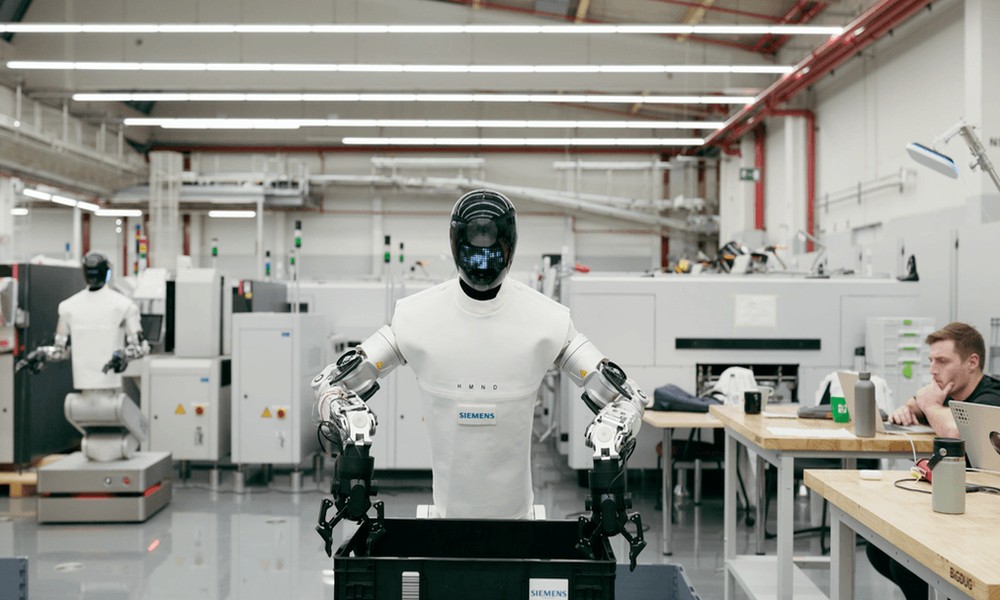
Shortening the deployment time of robotic systems is rarely a matter of simply choosing faster hardware or more advanced robots. The bottleneck usually emerges at the intersection of engineering decisions, system integration complexity, and the variability of real production conditions. A robotic cell that performs flawlessly in a demo environment often behaves differently once exposed to inconsistent part positioning, operator interaction, or upstream process variation. Deployment time expands not because of a single technical limitation, but due to cumulative friction across planning, configuration, and validation stages. Understanding where this friction originates is the first step toward reducing it in a measurable way.
Where Time Is Actually Lost
A significant portion of deployment time is consumed before the robot even starts moving. System design assumptions must be translated into physical layouts, safety constraints, and communication protocols between devices. Each additional component-gripper, vision system, conveyor, safety scanner-introduces dependencies that must be configured and tested. These dependencies are not linear; a change in one parameter often forces recalibration elsewhere. As a result, integration becomes an iterative loop rather than a sequential process.
Another source of delay lies in programming methodology. Traditional robot programming often relies on low-level scripting or vendor-specific languages, which require both expertise and time to adjust. When process engineers need to modify workflows, even small changes can cascade into longer validation cycles. The issue is not programming itself, but the rigidity of the programming model relative to the variability of production tasks.
Standardization as a Structural Advantage
One of the most effective ways to reduce deployment time is to standardize not only components but also logic. Modular tooling and predefined application templates allow teams to bypass repetitive engineering steps. Instead of designing each robotic application from scratch, integrators can reuse validated configurations and adapt them to specific use cases. This shifts the focus from building systems to configuring them.
Standardization also simplifies troubleshooting. When components behave predictably within known parameters, identifying the root cause of an issue becomes faster. This is particularly relevant in small and medium-sized enterprises, where engineering resources are limited and downtime has a direct financial impact.
The Role of Software Abstraction
Reducing deployment time increasingly depends on how effectively complexity is abstracted at the software level. Modern robotic systems benefit from interfaces that allow engineers to define tasks in terms of outcomes rather than motion sequences. Instead of specifying exact robot trajectories, users define goals such as “pick,” “place,” or “inspect,” and the system translates these into executable actions.
This abstraction reduces the cognitive load on engineers and accelerates iteration cycles. Changes can be implemented and tested without rewriting large portions of code. It also enables closer collaboration between process engineers and operators, since workflows become more intuitive and less dependent on specialized programming knowledge.
An example of this shift can be observed in platforms like dployOnRobot, where deployment logic is structured around application-driven workflows rather than low-level robot control. This approach minimizes the gap between concept and execution, allowing systems to be configured and adjusted directly on the production floor.
Minimizing Physical Iteration
Even with optimized software, physical iteration remains a critical factor. Each adjustment to tooling, positioning, or safety configuration requires validation under real conditions. The key to reducing this phase is not eliminating iteration, but making it more predictable.
Digital twins and simulation tools help identify potential issues before installation, but their effectiveness depends on the accuracy of input data. In practice, hybrid approaches work best: initial validation in a simulated environment, followed by rapid fine-tuning on-site. The faster the transition between these stages, the shorter the overall deployment time.
Another practical consideration is fixture design. Poorly designed fixtures introduce variability that no amount of programming can fully compensate for. Stable, repeatable part positioning reduces the need for complex vision systems or adaptive algorithms, simplifying both setup and maintenance.
Organizational Factors That Influence Speed
Technical improvements alone do not guarantee faster deployment. Organizational structure plays a decisive role. When responsibilities are fragmented between departments-engineering, maintenance, operations-communication delays become inevitable. Decisions take longer, and changes require multiple approvals.
Cross-functional teams reduce this friction. When the same group is responsible for design, integration, and validation, feedback loops become shorter and more actionable. This alignment is particularly important in SMEs, where flexibility can be leveraged as a competitive advantage.
Training is another overlooked factor. Systems designed for rapid deployment lose their advantage if users require extensive training to operate them. Intuitive interfaces and standardized workflows reduce onboarding time and allow teams to focus on optimization rather than basic operation.
Moving From Projects to Repeatable Processes
The most consistent reductions in deployment time occur when robotic implementation is treated as a repeatable process rather than a one-off project. Each deployment should generate knowledge that feeds into the next one: validated configurations, known failure points, optimized workflows. Over time, this creates a library of solutions that can be adapted quickly to new applications.
This shift changes the economics of automation. Instead of large, time-consuming implementations, companies can deploy smaller, incremental solutions with shorter lead times. The cumulative effect is not only faster deployment, but also greater agility in responding to production changes.
Reducing deployment time is therefore less about speeding up individual steps and more about restructuring how those steps are connected. When integration, programming, and validation are aligned within a coherent framework, the entire process becomes more predictable-and significantly faster.

Comments are closed.