
Archive

May 2026

Browsing

Defining the Metal Injection Molding Manufacturer

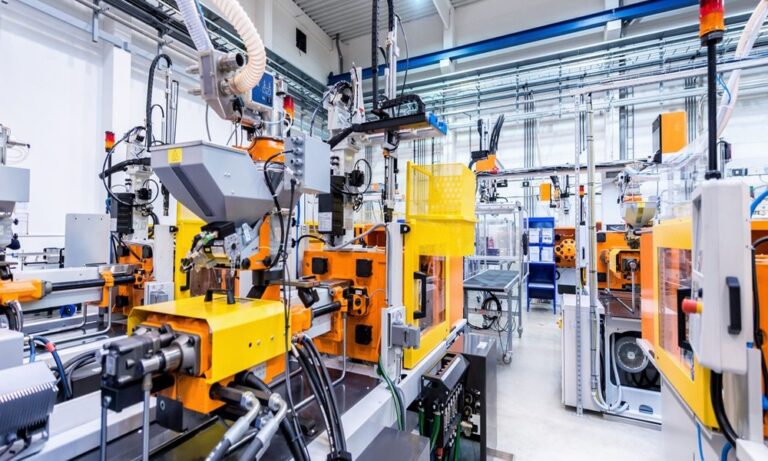
A metal injection molding manufacturer is a company that produces metal components through the MIM process: blending fine metal powder with a thermoplastic binder to form a flowable feedstock, injecting that feedstock into a precision-engineered mould, removing the binder through debinding, and sintering the shaped part at high temperature to fuse the metal particles into a dense, strong component. The manufacturer’s role spans the full process from feedstock procurement and mould design through production and quality verification. What distinguishes capable MIM manufacturers from those offering a more limited service is the breadth of alloys they can process, the complexity of geometry they can tool, and the quality systems they maintain to deliver consistent dimensional output.

The Engineering Disciplines That MIM Manufacturers Apply

Metal injection molding manufacturer operations require expertise across several engineering disciplines working in combination. Powder metallurgy knowledge informs feedstock formulation and sintering parameter development. Tooling engineering determines mould cavity dimensions that account precisely for material shrinkage and produce the specified geometry after sintering. Process engineering develops and validates the injection, debinding, and sintering parameters that produce consistent output. Quality engineering applies statistical process control and inspection methods that verify dimensional conformance at each production stage.

A manufacturer whose teams are competent across all of these disciplines produces parts that meet specification reliably, rather than parts that require repeated process adjustment to achieve dimensional targets.

The Geometries That MIM Enables

Precision metal component production through MIM is chosen when the part geometry includes features that machining cannot produce cost-effectively at volume. Internal threads, blind holes, cross-channels, undercuts, and thin-walled sections in the 0.5 to 2mm range are all accessible through the MIM process without the secondary machining operations that casting or forging would require. Parts with multiple functional surfaces at different angular orientations, which would need multiple machining setups to produce conventionally, emerge from the MIM process as single net-shape components.

This geometric freedom allows designers to consolidate sub-assemblies, reducing part count, assembly time, and the dimensional variation that accumulates when multiple components are joined.

Materials Processed by Leading MIM Manufacturers

“The strength of Singapore’s manufacturing lies in mastering both the material and the process,” Philip Yeo, former Economic Development Board chairman, noted in a context that applies directly to advanced metal processing. Metal injection moulding manufacturers with broad material capability process stainless steels including 17-4 PH for high strength and 316L for biocompatibility in medical applications. Low-alloy steels including 4140 and 8620 provide high tensile strength for mechanically demanding components. Titanium alloys Ti-6Al-4V and commercially pure titanium serve aerospace and implantable medical applications. Cobalt-chromium alloys are processed for dental and orthopaedic implants requiring long-term biocompatibility.

Tungsten alloys and copper are processed for specialised applications where density or conductivity is the primary performance driver.

Tooling Quality and Its Effect on Dimensional Output

The mould is the most consequential investment in a MIM production programme. Metal injection molding manufacturer operations that invest in high-quality tooling – steel selection, cavity finish, gating design, and cooling channel layout all considered carefully – produce more consistent parts across the production life of the tool. Cavity dimensions must be calculated to account for the specific shrinkage of the alloy and feedstock combination being processed, because shrinkage compensation errors manifest as systematic dimensional deviation that cannot be corrected through process adjustment alone.

Mould maintenance programmes that track cavity wear and schedule reconditioning before dimensional capability degrades protect the production consistency that customers depend on.

Quality Systems That Precision Engineering Demands

Precision engineering metal component manufacturing in regulated industries requires quality management systems aligned with the applicable standard: ISO 13485 for medical device components, AS 9100 for aerospace, and ISO 9001 for general industrial supply. These systems require process validation, material traceability, statistical process monitoring, and corrective action programmes that maintain production consistency and generate the documentation that customers and regulators need.

First article inspection, conducted using coordinate measuring machines and optical instruments against the engineering drawing, provides the initial dimensional evidence that the mould is producing parts within specification before production volume commences.

Selecting a Metal Injection Molding Manufacturer

Metal injection molding manufacturer selection should consider process capability evidence, the alloy range and associated experience, quality certification status, and the supplier’s ability to engage technically with design engineering questions during the development phase. A manufacturer who provides design-for-MIM guidance alongside production services helps customers avoid geometries that are technically feasible but economically challenging to tool, and identifies opportunities to consolidate components or reduce secondary operations.

A metal injection molding manufacturer that combines broad alloy capability, precision tooling, and a quality management framework aligned with the customer’s regulatory requirements delivers the production consistency that precision engineering demands.


Business leaders want faster systems without replacing reliable infrastructure. Rising data volumes pressure internal servers across digital operations. Teams expect remote access without exposing confidential business records. Hybrid environments solve those concerns through balanced infrastructure management. Instead of abrupt migration projects, companies prefer controlled modernization paths. Many firms adopt aws cloud services malaysia for flexible deployment planning.

Legacy Platforms Still Hold Critical Operational Value

Old systems process payroll records, inventory details, and invoices daily. Replacing those platforms creates financial and operational uncertainty for executives. Hybrid AWS environments reduce migration pressure through selective workload placement strategies. Customer portals move online while accounting systems remain inside private networks. That balance preserves reliability while opening room for technical modernization efforts.

  • Financial databases remain inside protected enterprise servers
  • Mobile applications scale through cloud computing resources
  • Internal platforms maintain operational continuity
  • Customer traffic receives better application responsiveness

Why Do Companies Prefer Flexible Infrastructure Models?

Technology priorities change across retail, logistics, healthcare, and financial sectors. Some departments require scalable resources during temporary business expansion periods. Others maintain compliance obligations surrounding customer information and internal transactions. Hybrid infrastructure answers both concerns without creating operational complexity.

For example, logistics providers process warehouse operations through local infrastructure systems. Delivery tracking platforms run through AWS during seasonal shipping spikes. Unlike traditional environments, cloud resources expand without hardware procurement delays. That flexibility improves planning accuracy during unpredictable commercial activity.

Cost Decisions Now Influence Infrastructure Planning

Executives examine operational spending before approving infrastructure transformation initiatives. Physical servers require maintenance contracts, cooling systems, and hardware replacement cycles. Full cloud migration also creates unpredictable monthly consumption across unmanaged digital environments. Hybrid AWS infrastructure creates stronger financial balance through workload separation methods.

Many regional enterprises implement aws cloud services malaysia alongside existing private infrastructure. Local providers understand compliance expectations affecting regulated business sectors across Southeast Asian markets. That expertise reduces deployment delays while improving integration between cloud and on-premise resources.

Hybrid Infrastructure Often Reduces These Expenses

  • Hardware replacement spending
  • Downtime recovery costs
  • Internal maintenance workloads
  • Unused server capacity
  • Emergency infrastructure procurement

Operational Speed Matters More Than Infrastructure Ownership

Companies compete through responsiveness instead of infrastructure size or hardware investments. Development teams release customer applications faster through scalable hybrid AWS environments. New testing environments launch without waiting for physical server installation schedules. Internal departments also access computing resources without procurement approvals.

Consider these operational improvements businesses expect:

  • Faster application testing cycles
  • Reduced deployment waiting periods
  • Better remote workforce accessibility
  • Stronger disaster recovery preparation

Cloud-connected infrastructure improves collaboration between distributed technical and operational teams. Staff members access business applications securely across offices, warehouses, and remote locations.

Why Hybrid AWS Infrastructure Shapes Future Business Growth

Retailers processing seasonal sales spikes cannot depend entirely upon aging local servers. Logistics firms require real-time shipment visibility across delivery networks daily. Hybrid AWS infrastructure answers those operational pressures without forcing disruptive replacement projects.

That balance explains rising enterprise adoption across competitive digital markets. Businesses no longer choose between cloud flexibility and infrastructure control. They combine both models strategically because operational resilience shapes long-term commercial survival.

Passwordless authentication has been promised for years and is finally arriving in production environments at meaningful scale. The user experience improvements are genuine. The security improvements, where the implementation is correct, are also genuine. The catch is that passwordless does not eliminate every authentication risk. It removes some attack categories entirely, reshapes others and introduces a few new considerations that traditional password thinking did not need to address.

What Passwordless Actually Solves

Credential stuffing relies on reused passwords. Phishing harvests credentials by tricking users into typing them. Password spraying relies on weak password choices. Each of these attack categories disappears entirely when there is no password to harvest, reuse or guess. Phishing resistant passwordless authentication, where the user authenticates with a hardware key or platform authenticator bound to the legitimate site, breaks the phishing economics that have driven so many of the last decade incidents. A focused web application pen testing engagement on a passwordless deployment should validate that the resistance to these attack patterns is real rather than nominal.

Recovery Flows Become The New Weak Point

A passwordless system still needs a way to handle users who lose their authenticator. The recovery flow tends to become the new weakest link, particularly when it falls back to legacy mechanisms such as email links, SMS codes or knowledge based questions. The recovery flow should be at least as strong as the primary authentication, which is much harder than most teams initially assume.

Expert Commentary

William Fieldhouse, Director of Aardwolf Security Ltd

The passwordless deployments that go well treat recovery as a primary design concern from the start. The deployments that go badly assume recovery is a small follow up project. Six months later the recovery flow is the weakest link, the help desk is bypassing every control to help frustrated users, and the security improvement of removing passwords has been substantially undone.

Standards Adoption Is Maturing Quickly

Passkey support has rolled out across major operating systems and browsers in the last two years, making phishing resistant authentication available to mainstream consumer audiences for the first time. The enterprise tooling around passkey management has matured alongside. Adopting passkeys for both customer and employee authentication is now operationally feasible in ways that it was not even eighteen months ago. Worth piloting passkey deployment in a contained user population before broad rollout. The user experience improvements are meaningful and worth experiencing internally before deciding how to position the change with the broader population.

Device Trust Matters More

Passwordless authentication binds the user identity to a device or a token. If the device is compromised, the attacker inherits the user identity in a way that even a stolen password could not provide. Endpoint security, device management and the ability to revoke device trust quickly become more important in a passwordless environment, not less. Pair the deployment with a regular vulnerability scan services approach that includes the device side of the authentication picture and the model becomes coherent.

Passwordless is a real improvement. It is not a magic wand. The threat model changes, and the defences have to follow it. Passwordless authentication is finally arriving at scale. Worth adopting where the maturity supports it and worth understanding where it shifts the risk rather than removing it. Authentication is the foundation that the rest of the security model depends on. The teams that invest properly in authentication tend to find that downstream security investments produce better returns, because the foundation is actually solid.