
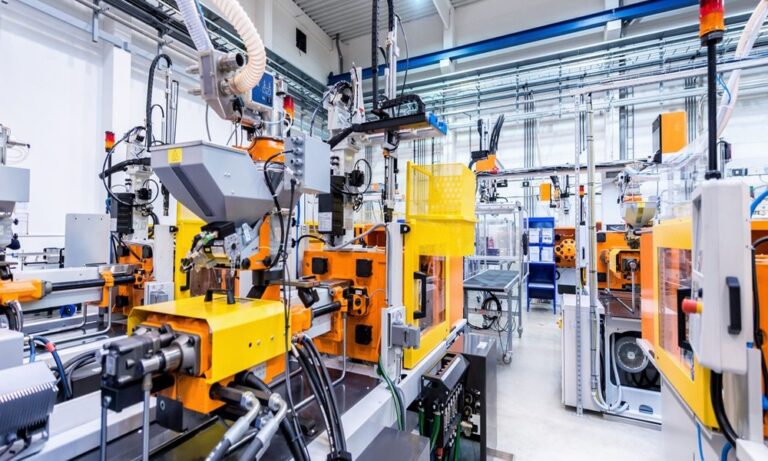
Defining the Metal Injection Molding Manufacturer
A metal injection molding manufacturer is a company that produces metal components through the MIM process: blending fine metal powder with a thermoplastic binder to form a flowable feedstock, injecting that feedstock into a precision-engineered mould, removing the binder through debinding, and sintering the shaped part at high temperature to fuse the metal particles into a dense, strong component. The manufacturer’s role spans the full process from feedstock procurement and mould design through production and quality verification. What distinguishes capable MIM manufacturers from those offering a more limited service is the breadth of alloys they can process, the complexity of geometry they can tool, and the quality systems they maintain to deliver consistent dimensional output.
The Engineering Disciplines That MIM Manufacturers Apply
Metal injection molding manufacturer operations require expertise across several engineering disciplines working in combination. Powder metallurgy knowledge informs feedstock formulation and sintering parameter development. Tooling engineering determines mould cavity dimensions that account precisely for material shrinkage and produce the specified geometry after sintering. Process engineering develops and validates the injection, debinding, and sintering parameters that produce consistent output. Quality engineering applies statistical process control and inspection methods that verify dimensional conformance at each production stage.
A manufacturer whose teams are competent across all of these disciplines produces parts that meet specification reliably, rather than parts that require repeated process adjustment to achieve dimensional targets.
The Geometries That MIM Enables
Precision metal component production through MIM is chosen when the part geometry includes features that machining cannot produce cost-effectively at volume. Internal threads, blind holes, cross-channels, undercuts, and thin-walled sections in the 0.5 to 2mm range are all accessible through the MIM process without the secondary machining operations that casting or forging would require. Parts with multiple functional surfaces at different angular orientations, which would need multiple machining setups to produce conventionally, emerge from the MIM process as single net-shape components.
This geometric freedom allows designers to consolidate sub-assemblies, reducing part count, assembly time, and the dimensional variation that accumulates when multiple components are joined.
Materials Processed by Leading MIM Manufacturers
“The strength of Singapore’s manufacturing lies in mastering both the material and the process,” Philip Yeo, former Economic Development Board chairman, noted in a context that applies directly to advanced metal processing. Metal injection moulding manufacturers with broad material capability process stainless steels including 17-4 PH for high strength and 316L for biocompatibility in medical applications. Low-alloy steels including 4140 and 8620 provide high tensile strength for mechanically demanding components. Titanium alloys Ti-6Al-4V and commercially pure titanium serve aerospace and implantable medical applications. Cobalt-chromium alloys are processed for dental and orthopaedic implants requiring long-term biocompatibility.
Tungsten alloys and copper are processed for specialised applications where density or conductivity is the primary performance driver.
Tooling Quality and Its Effect on Dimensional Output
The mould is the most consequential investment in a MIM production programme. Metal injection molding manufacturer operations that invest in high-quality tooling – steel selection, cavity finish, gating design, and cooling channel layout all considered carefully – produce more consistent parts across the production life of the tool. Cavity dimensions must be calculated to account for the specific shrinkage of the alloy and feedstock combination being processed, because shrinkage compensation errors manifest as systematic dimensional deviation that cannot be corrected through process adjustment alone.
Mould maintenance programmes that track cavity wear and schedule reconditioning before dimensional capability degrades protect the production consistency that customers depend on.
Quality Systems That Precision Engineering Demands
Precision engineering metal component manufacturing in regulated industries requires quality management systems aligned with the applicable standard: ISO 13485 for medical device components, AS 9100 for aerospace, and ISO 9001 for general industrial supply. These systems require process validation, material traceability, statistical process monitoring, and corrective action programmes that maintain production consistency and generate the documentation that customers and regulators need.
First article inspection, conducted using coordinate measuring machines and optical instruments against the engineering drawing, provides the initial dimensional evidence that the mould is producing parts within specification before production volume commences.
Selecting a Metal Injection Molding Manufacturer
Metal injection molding manufacturer selection should consider process capability evidence, the alloy range and associated experience, quality certification status, and the supplier’s ability to engage technically with design engineering questions during the development phase. A manufacturer who provides design-for-MIM guidance alongside production services helps customers avoid geometries that are technically feasible but economically challenging to tool, and identifies opportunities to consolidate components or reduce secondary operations.
A metal injection molding manufacturer that combines broad alloy capability, precision tooling, and a quality management framework aligned with the customer’s regulatory requirements delivers the production consistency that precision engineering demands.